
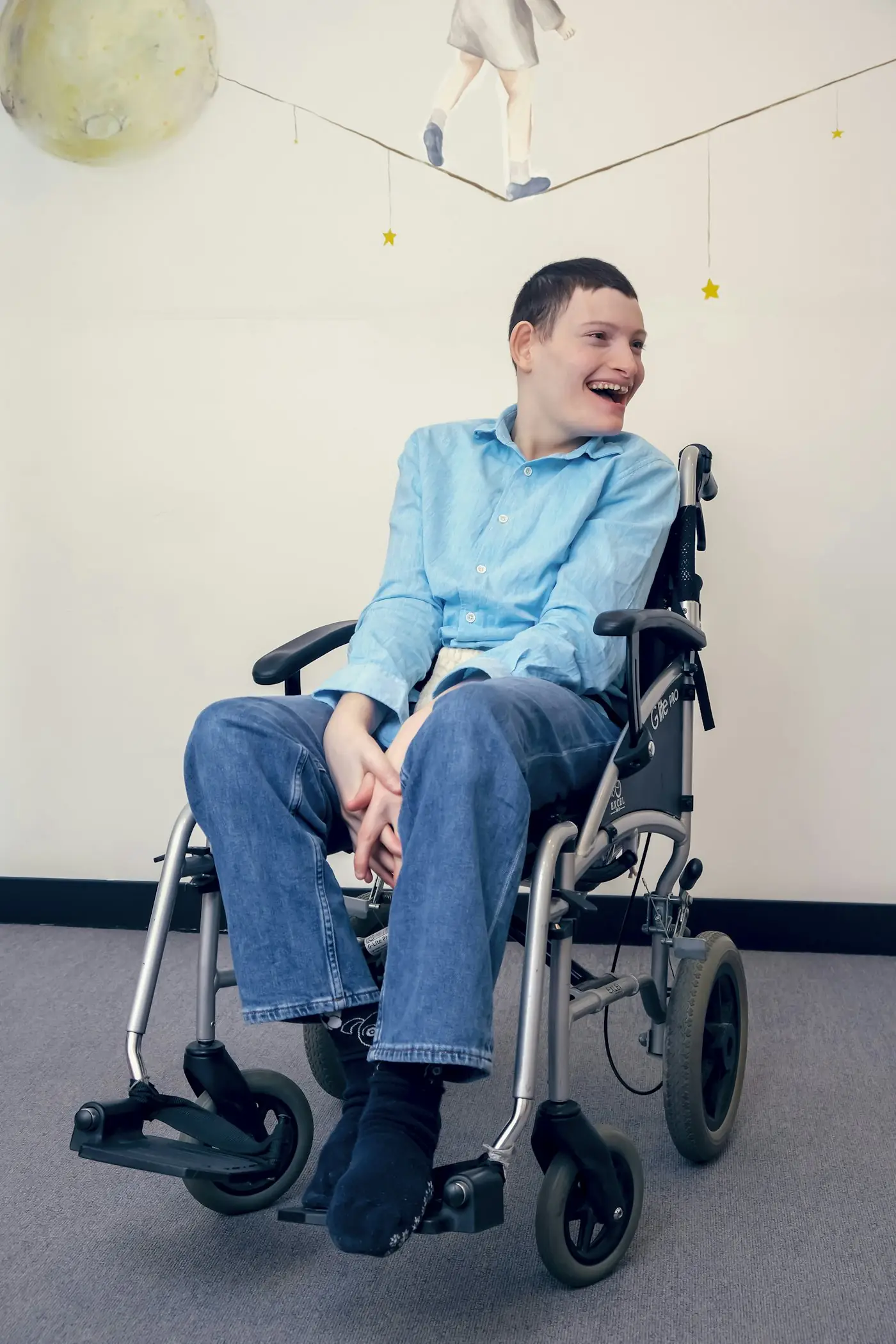
What is cerebral palsy?
Cerebral palsy is a group of lifelong conditions that affect movement, muscle tone and posture. It is caused by differences in the developing brain, usually before or around birth.
Cerebral palsy affects each person differently. Some people walk independently, while others use a wheelchair or other equipment. It can affect daily life in ways such as:
- Needing help with transfers, such as moving from bed to chair
- Muscle stiffness, tiredness or pain that makes some tasks harder
- Needing support with eating, drinking or personal care
- Using speech, a device or other ways to communicate
Many people with cerebral palsy study, work, play sport and lead busy social lives. Good support makes those things easier to do, while you stay in charge of how your day runs.
How do support workers help people with cerebral palsy?
Support workers help people with cerebral palsy with personal care, transfers, household tasks and getting to the places they want to go.
A worker might help with showering and dressing in the morning, support transfers using your hoist or other equipment, prepare meals, or travel with you to uni, work or a game. Workers always follow the plans written by your health team, such as a manual handling plan or a mealtime management plan, so support is safe and consistent.
Workers also support independence. That means asking how you like things done and letting you lead, rather than taking over. If your therapists have set exercises or routines, your worker can help you fit them into your day.
Learn more on our personal care page.
What should you look for in a cerebral palsy support worker?
Look for a cerebral palsy support worker who is confident with transfers and equipment, follows your plans carefully and respects how you like things done.
Things to ask about include:
- Experience with hoists, wheelchairs and other equipment you use
- Willingness to learn and follow your manual handling and mealtime plans
- Patience with your preferred communication method
- Shared interests, such as sport, music or gaming
- Reliability for early mornings or regular routines
Enrichment Care sends worker profiles for you to review, then arranges a meet and greet so you can check the fit before supports start. Our post on a day with a support worker shows what support can look like. If the match is not right, we will find someone else.
Can the NDIS fund cerebral palsy support?
The NDIS can fund cerebral palsy support when it substantially reduces your ability to do everyday activities, which is common for many people with the condition.
Plans often include Core supports for personal care, household tasks and community participation, plus other funding for equipment and therapy from separate providers. Higher-intensity personal care may be funded at a different price limit when needed.
Young children with cerebral palsy can be supported through the early childhood approach. Older children and adults usually connect with a Local Area Coordinator. Evidence from your treating health professionals helps show how cerebral palsy affects your daily life.
Read what is the NDIS for an overview, and check ndis.gov.au for the latest access and pricing rules.