How can a support worker help you build independence at home?
Short answer
A support worker builds your independence at home by doing tasks with you instead of for you. They break jobs like cooking, cleaning and getting ready into small steps, practise them in a steady routine, keep you safe while you learn, and step back as your confidence grows.
What does independence at home actually mean?
Independence at home means doing more of the things you want to do yourself, in your own way, with the right amount of support. It looks different for every person.
For one person, it might mean making a cup of tea without help. For another, it might mean running the whole weekly shop and cooking dinner most nights. Both are real goals.
Independence also includes making choices. Deciding what to eat, when to shower or how to arrange your room are all part of living your own life, even if someone helps with the physical side.
What is the difference between doing with and doing for?
Doing for means the worker completes the task while you watch. Doing with means you complete as much as you can and the worker fills the gaps.
Doing for can feel quicker on a busy morning. Over time, though, it can mean you lose skills or never get the chance to build them.
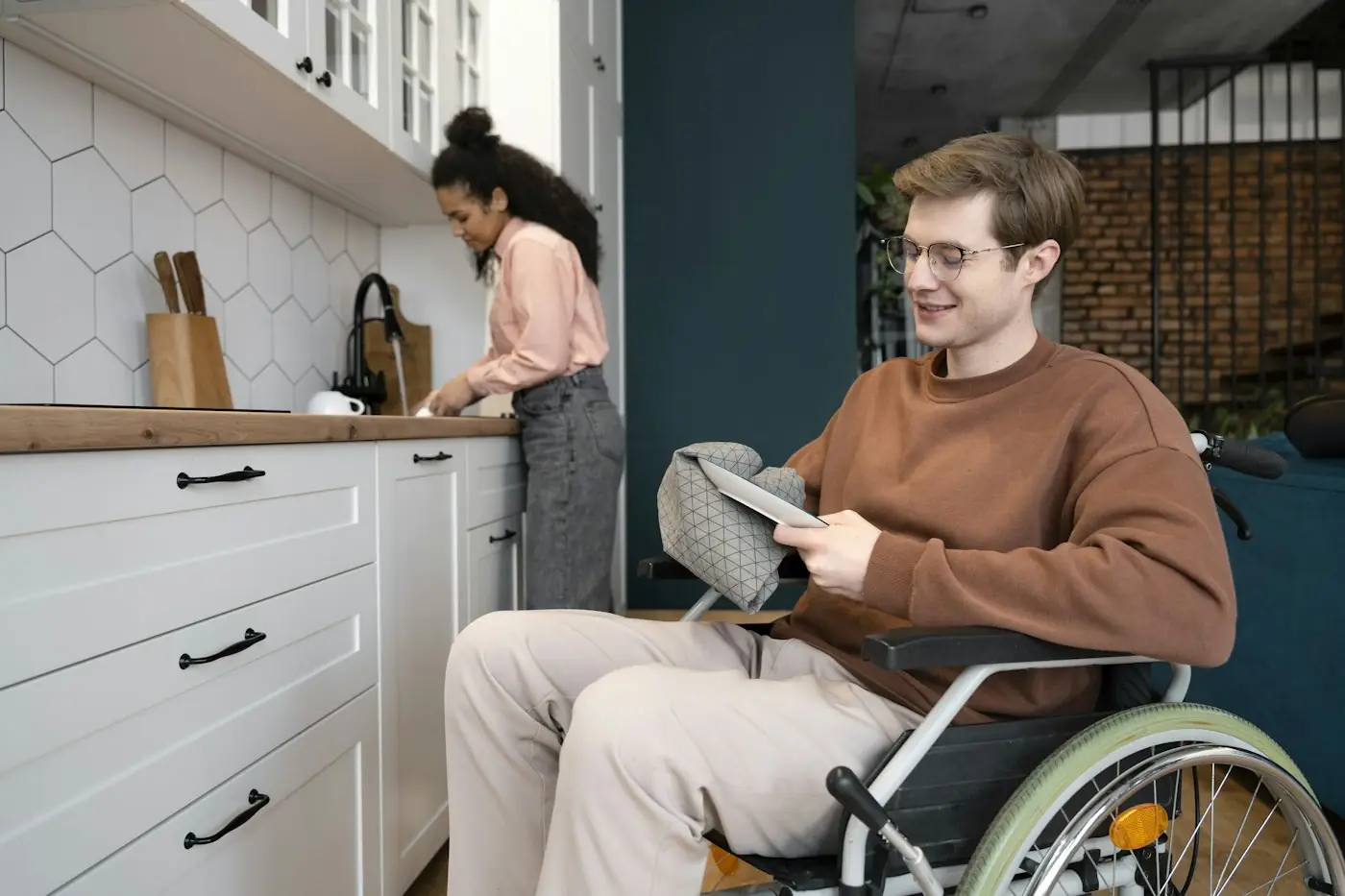
A worker who does things with you might hand you the peeler and hold the bowl steady, or talk you through which button starts the washing machine. They notice the parts you can already do and leave those to you.
This approach sits at the heart of life skills development, and it works across every part of daily living support.
How do graded steps help you learn a new task?
Graded steps break a big task into small parts, so you learn one piece at a time and add the next piece once the first feels easy.
Here is an example of how making toast could be broken down:
- Take the bread out of the cupboard.
- Put two slices in the toaster and press the lever down.
- Wait for the toast to pop, then lift it out onto a plate.
- Choose a spread and use a knife to spread it.
- Wipe the bench and put things away.
At first, the worker might do steps 1 to 4 while you do step 5. Then you take on step 4 as well. Over a few weeks, you might do every step while the worker just stays nearby.
Some people start from the first step instead. The worker can talk with you about which way feels better.
Celebrating each step matters. Finishing one more part of a task than last week is real progress, and noticing it keeps you motivated.
Why does a home routine make such a difference?
A routine gives you repeated practice at the same time and in the same order, which helps new skills stick and makes your day feel more predictable.
If you practise folding laundry every Tuesday and Friday, your body and memory start to know what comes next. You spend less energy working out the task and more energy doing it.
Routines also help if you have more than one worker. When everyone follows the same steps, you get consistent practice. You can read more about this in our post on how routine builds stability.
If your own health team has set exercises or strategies for you, a support worker can help you practise those in your daily routine. Your therapists stay in charge of the plan itself.
How do support workers keep you safe while you learn?
Support workers keep you safe by setting up the space well, staying close during risky steps and agreeing with you on when they will step in.
Safety and independence work together. Some simple ways a worker might lower risk:
- Moving items you use often to a height you can reach.
- Using a kettle tipper, non-slip mat or other aids you already have.
- Staying beside you while you use the stove or a sharp knife, then moving further back as you gain skill.
- Agreeing on a word or signal for when you want help.
- Keeping floors clear so you can move around easily.
A good worker respects your right to try things, even when you might find them hard. They talk with you about risks instead of making decisions for you.
Which cooking and cleaning skills are good to start with?
Good starting skills are tasks you do often, that matter to you and that have clear steps, such as making a simple breakfast, wiping benches or putting a load of washing on.
The table below shows some common home skills and what early and later stages might look like.
| Skill | Early stage | Later stage |
|---|---|---|
| Meal preparation | Choosing a meal and washing vegetables | Planning the week's meals and cooking them |
| Shopping | Ticking items off a list in the shop | Writing the list and paying at the checkout |
| Laundry | Sorting clothes into colours | Running the machine and hanging washing out |
| Cleaning | Wiping the table after meals | Following a weekly cleaning plan |
| Personal care | Choosing clothes for the day | Showering and dressing with minimal prompts |
Our meal preparation support can focus on building your cooking skills, and NDIS cleaning support can include learning household tasks alongside you.
How can Enrichment Care help you build independence at home?
Enrichment Care matches you with a support worker who suits your language, culture, personality and goals, then helps you practise home skills at a pace that works for you.
Before supports start, you see worker profiles and meet your worker at a meet and greet. Together you can talk about the tasks you want to take on and how you would like them taught.
If you would like to talk about building more independence at home, call us on 1300 543 123 or get in touch online.
Frequently asked questions
Can NDIS funding pay for a worker to teach me home skills?
Yes, in many cases. Help with daily tasks usually comes from Assistance with Daily Life in your Core budget, and some skill building may sit in Capacity Building. Check your plan or ask your support coordinator or plan manager which category fits your goals.
What if I want my worker to just do the task some days?
That is your choice. Building skills does not mean you have to do everything yourself every time. On a tiring day, you can ask for more help, and pick up the practice again when you feel ready.
How long does it take to learn a new home skill?
There is no set timeframe. Some people pick up a task in a few sessions, while others need months of steady practice. Regular sessions at the same time each week usually help skills stick faster.
Can family members help with the same routine?
Yes. If family members follow the same steps as your support worker, you get more practice and less confusion. Your worker can share the steps you are working on so everyone uses the same approach.
This article is general information, not advice about your plan. NDIS rules and price limits change, so check ndis.gov.au or talk to your NDIS contact for current details. Last reviewed 17 June 2026.